We’ve Improved How We Build. Now It’s Time to Improve What We Build With.

Written by
Lee Cowen, Managing Director
Milbank Concrete Products
20/08/2026
Construction has never stood still.
Over the years we’ve found quicker ways to build, safer ways to work and more efficient ways to manufacture. We’ve embraced modern methods of construction, invested in automation and kept looking for ways to improve quality and performance.
That’s how our industry moves forward. But while we’ve spent years improving how we build, I think we now need to pay just as much attention to what we build with.
For me, that’s one of the biggest opportunities we’ve got. We’ve made huge progress in improving the operational performance of buildings. Better insulation, more efficient heating systems and smarter design mean we’re constructing buildings that use far less energy than they did even a decade or two ago.
But as operational emissions come down, the carbon that goes into constructing those buildings in the first place becomes harder to ignore.
Embodied carbon covers the emissions associated with extracting raw materials, manufacturing products, transporting them to site and constructing a building. And unlike operational carbon, you can’t go back and reduce those emissions later. Once a building is built, they’re already there.
According to the Royal Institution of Chartered Surveyors (RICS), embodied carbon already accounts for around 10% of the UK’s greenhouse gas emissions, while globally the built environment is responsible for almost 40% of energy-related carbon emissions.
Those are big numbers, and they’re only going to come under more scrutiny.
The Industry Is Moving
I’ve been in this industry long enough to know that construction doesn’t change overnight. But you can usually tell when something has moved from being talked about to something people genuinely have to deal with.
I think we’re at that point with embodied carbon. Five or ten years ago, it wasn’t a topic that came up in many of our conversations. Today, it’s increasingly influencing the way major projects are designed, specified and procured.
Architects are being asked to design for lower whole-life carbon. Structural engineers are looking at how they can reduce embodied carbon without compromising performance. Contractors are being asked to demonstrate their sustainability credentials at tender stage. And procurement teams aren’t only looking at price and programme anymore. They want credible carbon data from suppliers alongside products they know will do the job.
Embodied carbon isn’t currently regulated through the UK Building Regulations, but Whole Life Carbon Assessments are becoming more common, Environmental Product Declarations (EPDs) are carrying more weight and proposals such as Part Z are keeping the issue firmly on the agenda.
Whether legislation comes next year or further down the line isn’t really the point. Customers are asking the questions now.
Let’s Be Honest About Concrete
Concrete isn’t going anywhere.
It’s one of the most dependable, versatile and durable construction materials we’ve got. We use it to build homes, schools, hospitals, commercial buildings and a huge amount of the infrastructure we rely on every day. For me, the conversation shouldn’t be about whether we use concrete. It should be about how we make better use of it and how we reduce its impact.
Cement production is one of the biggest contributors to concrete’s embodied carbon and is estimated to account for around 8% of global carbon dioxide emissions. It’s why there’s so much work going on across our industry around alternative cementitious materials, lower carbon mix designs and better manufacturing processes.
Innovation doesn’t always have to mean coming up with something completely new. There’s a lot to be said for taking something we know works and finding a better way of making it.
Hollowcore is a good example.
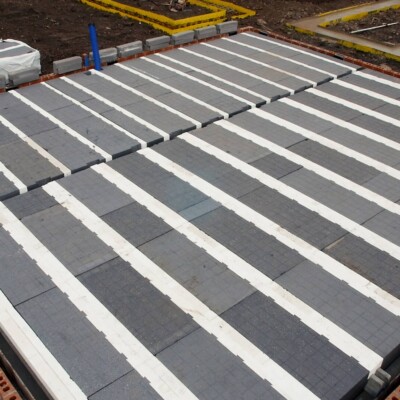
On a large residential or commercial development, you can have thousands of square metres of flooring. Reduce the embodied carbon across every square metre and suddenly you’re talking about a substantial saving across the project.
And if you can achieve that without asking the contractor to change how they build, or the engineer to compromise on performance, it starts to become a very practical way of reducing carbon.
That’s the sort of progress I’m interested in.
The Challenge We Set Ourselves
At Milbank Concrete Products, we’ve been asking ourselves a fairly straightforward question:
How can we help our customers reduce embodied carbon without making their lives more difficult?
Because if an innovation creates another headache on site or adds unnecessary complexity to a project, you’ve got to question how useful it really is.
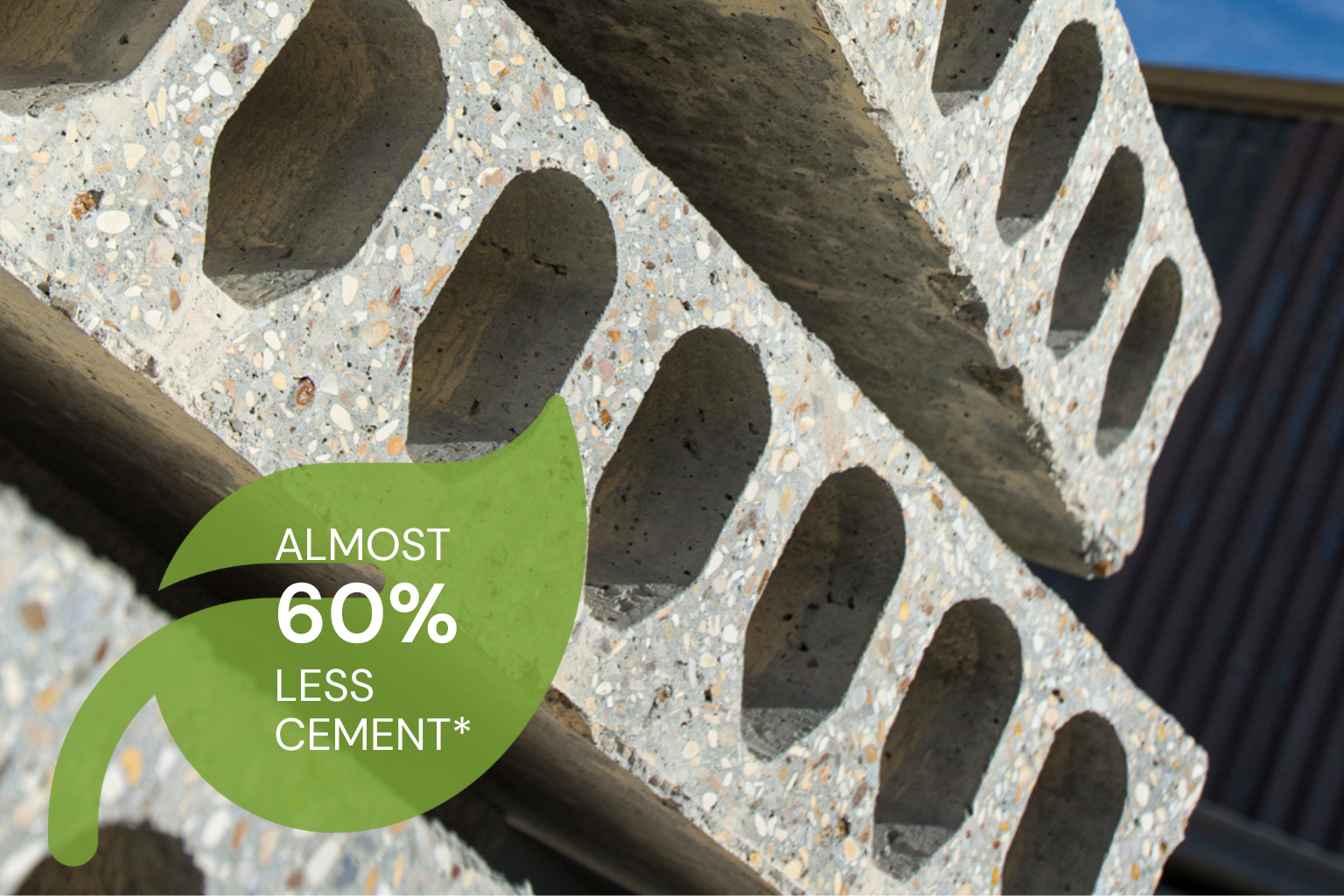
We’re currently trialling a new Ultra Low Carbon Hollowcore concrete mix with almost 60% less concrete when compared with our 2018 baseline.
What interests me about what we’re developing is that we’re not asking customers to completely rethink how they use Hollowcore. We’re working towards the same structural performance, reliability and installation benefits they’re used to, but with significantly less embodied carbon in the product itself.
For a contractor, engineer or specifier, that matters. If we can help them lower the carbon impact of a project without changing the way they design, specify or install the floor, then we’re making it easier for them to make a lower carbon choice.
Giving Customers Something They Can Actually Use
Sustainability is becoming a much bigger factor in how projects are specified, procured and delivered. But clients quite rightly want more than a manufacturer telling them a product is “green” or “sustainable”. They want to understand the difference their specification choices could make.
An architect needs confidence that the materials they’re specifying have the potential to reduce embodied carbon. An engineer needs to know that this doesn’t come at the expense of structural performance. A contractor needs products that work with the programme and don’t create problems on site. And procurement teams increasingly need robust data to support their decisions.
That’s why we developed our Carbon Reduction Calculator to help customers better understand the potential carbon savings of our product range.
The calculator enables customers to compare our Ultra Low Carbon Hollowcore and other lower carbon products against our 2018 baseline, providing indicative carbon savings based on the information currently available. As our Environmental Product Declarations (EPDs) are completed, we’ll also be able to provide more detailed data to support tender submissions and project specifications.
Our aim isn’t simply to develop lower carbon products. It’s to give customers greater visibility into the carbon impact of their specification decisions, backed by transparent data that supports more informed choices
Where We Go From Here
We’ve still got work to do. Our Ultra Low Carbon Hollowcore is currently in trials, and we won’t bring it to market until we’re satisfied it delivers the quality, consistency and performance people expect from Milbank. We’re also working towards securing the relevant EPDs so customers have independently verified data behind the product.
But what we’ve seen so far gives me real confidence.
I think this could make a significant difference, particularly on larger projects where the carbon savings quickly start to add up.
And that’s ultimately what we’re trying to achieve.
Construction doesn’t need another sustainability claim. It needs practical ways of reducing carbon that architects can specify, engineers can have confidence in and contractors can actually build with.
If we can deliver that while keeping all the things that already make Hollowcore work, then we’re moving in the right direction.
Sometimes progress isn’t about inventing something completely new. It’s about looking at something that’s worked for decades and asking a simple question: Can we make it better?