The Opportunity and the Oversight of The Future Homes Standard 2027

Written by
Tony Sheridan, Commercial Director
Milbank Concrete Products
02/06/2026
The Future Homes Standard is set to transform the UK housing landscape from 2027, but while the ambition is clear, so too are the challenges that lie ahead.
Builders are already navigating a difficult environment. Viability remains a constant concern, with rising material costs, planning delays and margin pressures continuing to impact delivery. At the same time, the industry faces an acute skills shortage, particularly in the specialist areas required to deliver higher-performing, low-carbon homes. Against this backdrop, the introduction of stricter regulatory standards adds another layer of complexity.
Yet perhaps the most significant issue is what the Future Homes Standard does not fully address. While it rightly focuses on reducing operational carbon through improved energy efficiency and low-carbon heating systems, it stops short of tackling embodied carbon within the construction supply chain. This omission creates a risk that, in striving to reduce emissions in use, we inadvertently increase emissions in construction.
This is where the conversation must evolve, and where materials such as concrete need to be better understood, not simply scrutinised.
A Standard Focused on Operational Carbon
The Future Homes Standard builds upon Part L of the Building Regulations, pushing for a 75% to 80% reduction in carbon emissions compared to current benchmarks. In practice, this means better insulated building envelopes, reduced heat loss and a shift away from fossil fuel heating systems.
These are all positive and necessary steps. However, focusing solely on operational performance only tells part of the story. Embodied carbon, the emissions associated with the production, transportation and installation of materials, can account for a significant proportion of a building’s total carbon footprint. As operational emissions decrease, embodied carbon becomes an even greater share of the whole.
If it is not addressed now, it risks becoming the next major regulatory challenge.
Rethinking Concrete’s Role
Concrete is often at the centre of this debate. It is a material that is both essential and, historically, carbon intensive. But the narrative is changing. The question is no longer whether concrete has a role to play in a low-carbon future, but how the industry can innovate to reduce its impact while maintaining the performance, durability and efficiency that modern construction demands.
Precast concrete, in particular, offers a compelling solution. Its factory-controlled production ensures precision and consistency, reducing waste and improving quality. Its inherent thermal mass can support more stable indoor temperatures, complementing the energy efficiency goals of the Future Homes Standard. Its durability also contributes to longer building lifespans, reducing the need for replacement and lowering whole-life carbon emissions.
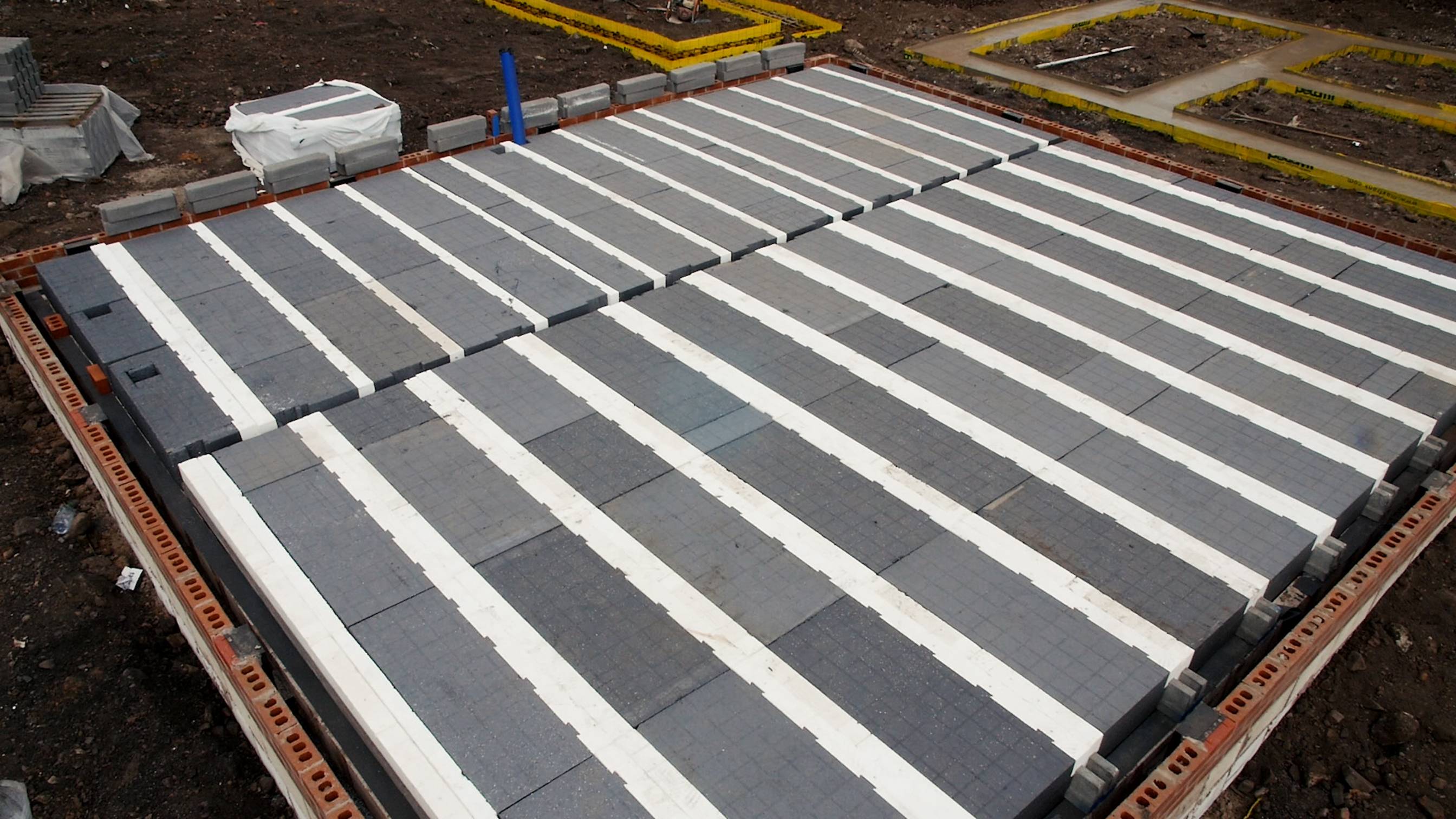
Importantly, this performance can be further enhanced through precast flooring solutions from Milbank Concrete Products, such as GDeck and WarmFloor Pro, which are specifically designed with thermal efficiency and compliance in mind. By integrating insulation and structural performance into a single system, these solutions help developers meet evolving standards while also improving buildability on site.
The real opportunity lies in how we manufacture it.
Driving Down Embodied Carbon in Practice
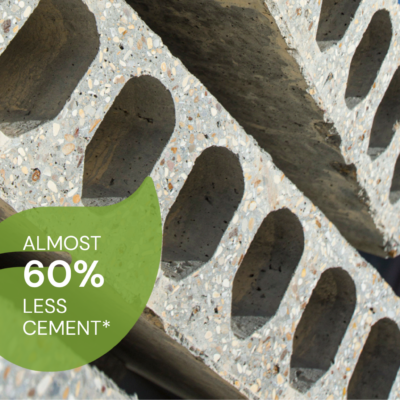
At Milbank Concrete Products, we have taken significant steps to reduce the embodied carbon of our products without compromising on performance. Through the adoption of advanced cement replacement technology, we have reduced cement content in our mixes by up to 21 percent. This single change is projected to remove over 2,800 tonnes of CO₂e from our products each year.
We are currently in the process of trialling enhanced new concrete mixes which will improve this saving even further in some of our industry leading products, including Hollowcore.
Importantly, this innovation also delivers improved early strength and enhanced surface finish, demonstrating that sustainability and performance can go hand in hand.
These advancements also feed directly into the development of systems like WarmFloor Pro, where improved thermal performance and reduced embodied carbon combine to support both regulatory compliance and long-term energy efficiency for homeowners.
A Holistic Approach to Sustainability
This focus on product innovation forms part of a much wider sustainability strategy. Since 2018, we have reduced our operational CO₂ emissions by 61 percent, bringing them down to just 350 tonnes. We have committed to achieving net-zero Scope 1 and 2 emissions by 2030, twenty years ahead of government targets, and are actively developing our Scope 3 roadmap.
Our approach extends across every aspect of our operations. From transitioning our delivery network to 100 percent renewable HVO biofuel, to investing in solar energy that now generates over 300,000 kWh annually, we are reducing emissions at source. The introduction of our on-site borehole and closed-loop water system ensure a more sustainable approach to water usage.
Equally important is transparency. Our in-house Carbon Reduction Calculator provides customers with clear, product-specific CO₂ data as part of every quotation, enabling more informed decision-making at every stage of a project.
This level of transparency is particularly valuable when specifying integrated systems where both structural performance and thermal benefits can be clearly quantified within the overall carbon assessment of a build.
Collaboration Will Be Critical
These are not just environmental initiatives, they are commercial factors. As the regulatory landscape evolves, developers will increasingly need partners who can demonstrate measurable carbon reductions and support compliance in a practical, cost effective way.
However, no single organisation can address this challenge alone. The Future Homes Standard will require a coordinated effort across the entire construction supply chain. Manufacturers, contractors, designers and policymakers must work together to ensure that both operational and embodied carbon are considered in tandem.
Looking Beyond 2027
There is a real opportunity here to rethink how we build, not just to meet minimum standards, but to create genuinely sustainable homes for the future. But to do so, we must acknowledge the full picture.
The Future Homes Standard is a significant step forward, but it is not the complete solution. Addressing embodied carbon will be critical if we are to future-proof our housing stock and deliver on the UK’s broader net-zero ambitions.
For the concrete sector, this is both a challenge and an opportunity. By continuing to innovate, invest and collaborate, including through advanced product solutions, we can ensure that concrete remains a vital, sustainable material at the heart of modern construction.